

MAIN ACTIVITIES CARRIED OUT
Project name: Strengthening Fisheries Management (FM) and Local Capacity Building (LCB) in Haiti
Project name: Strengthening Fisheries Management (FM) and Local Capacity Building (LCB) in Haiti
August 20, 2021 to April 20, 2022
This project aims to strengthen fisheries management and build local capacity in Haiti’s Three Bays Protected Area (PA3B) and the Baradères-Cayemites Marine Managed Area. Supported by The Nature Conservancy and partners, the initiative focuses on promoting sustainable fishing practices, enforcing closed seasons for vulnerable species, and training fishers on sea safety and resource protection.
Location: Northeast and Southwest coasts of Haiti (PA3B and Baradères-Cayemites).
• Development of a closed fishing season plan and fishing calendar
• Training sessions with local fishers and government staff on sea safety (using GPS/weather apps)
• Workshops on sustainable fisheries and community education
Project name: PILOT MANGROVE REHABILITATION AND CAPACITY BUILDING AT GRAND BOUCAN WITHIN THE BARADERES-CAYEMITES MARINE PROTECTED AREA (MPA).
August 2022 to May 30, 2023
This pilot project focuses on mangrove rehabilitation and community capacity building in the Baradères-Cayemites Marine Protected Area, Haiti’s largest MPA. The initiative responds to threats such as overfishing, mangrove extraction, sedimentation, and plastic pollution, which undermine biodiversity and community livelihoods.
Objectives:
• Develop a mangrove rehabilitation and monitoring plan
• Restore degraded areas by producing and planting 8,000 mangrove seedlings across 5 hectares
• Train at least 25 community members in mangrove nursery management and restoration techniques
• Raise awareness through workshops and promotional campaigns on the importance of mangroves for coastal protection, fisheries, and climate resilience
Main Activities Conducted:
- Design of a long-term restoration and monitoring plan
- Capacity-building workshops and field training on mangrove rehabilitation
- Pilot planting campaign with strong community participation
- Awareness-raising through community engagement and local partnerships
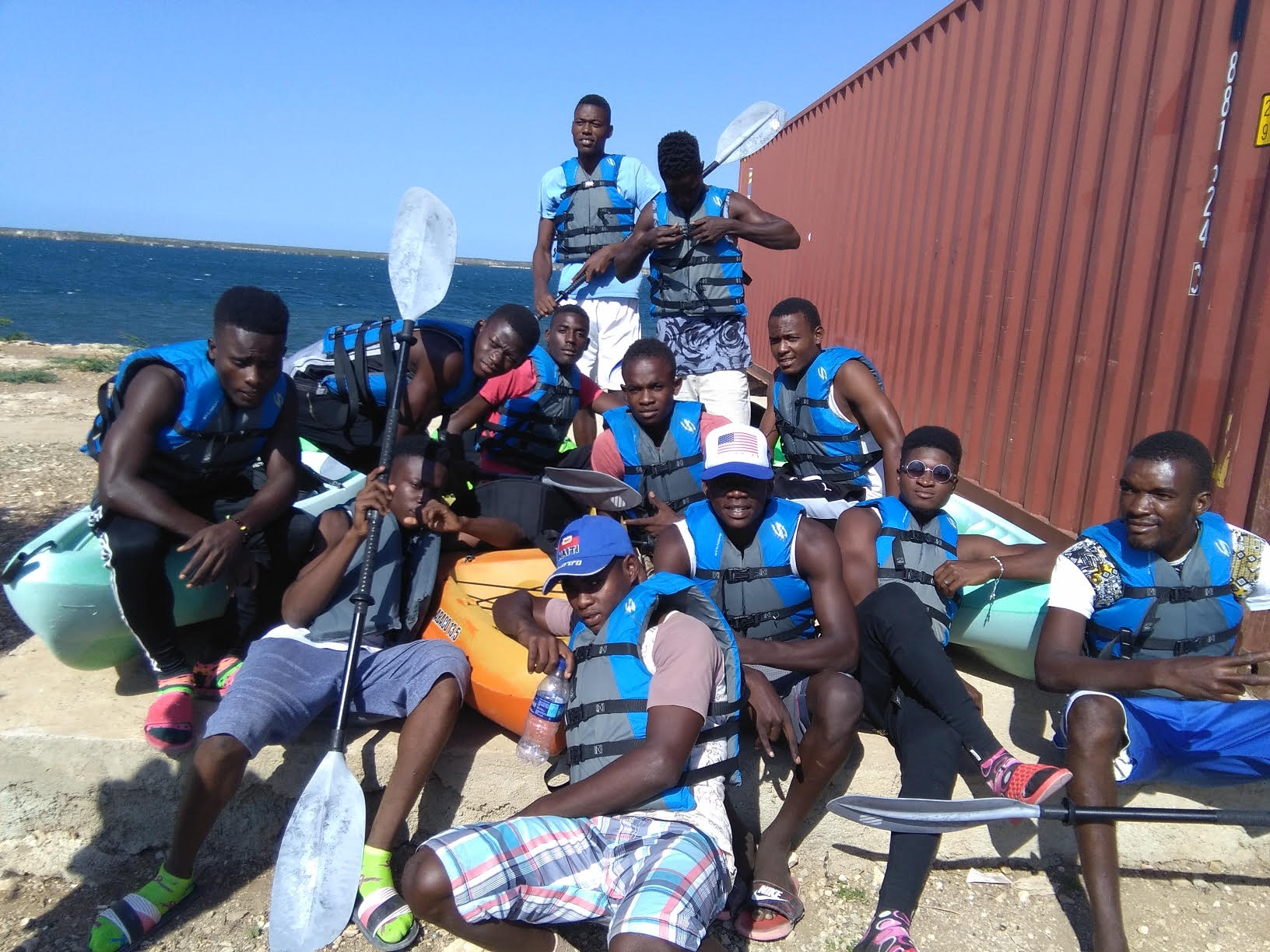
Enhancing the management of the Baraderes-Cayemites Marine Managed Area (MMA)
01 July 2021 to 30 September 2022
The project “Enhancing the Management of the Baradères-Cayemites Marine Managed Area (MMA)” focuses on restoring marine productivity and improving community well-being in southwest Haiti. The MMA, established in 2017, encompasses coral reefs, mangroves, seagrass beds, and rich fishing grounds, supporting over 226,000 local residents who rely heavily on these resources.
Objectives:
• Strengthen management of the MMA to ensure economic, social, and environmental benefits
• Protect and restore coral reefs, mangroves, and key fisheries species (lobster, conch, reef fish)
• Partner with fishers to improve sustainable fishing practices
•Develop eco-tourism opportunities to diversify income and reduce poverty
•Build the technical, leadership, and financial capacity of local organizations
• Engage the private sector to promote sustainable production and community entrepreneurship
Main Activities Conducted:
• Community outreach and education to support sustainable resource use • Development of the foundation for a participatory MMA management plan
• Training and capacity-building for fishers, women, and community organizations
•Promotion of alternative livelihoods such as eco-tourism and seaweed farming

Elaboration d’un plan de restauration des écosystèmes des mangroves dans les Aires protégées de Baradères – Cayemites ainsi que la restauration de 100 Hectares de Mangroves dans la même zone.
Juillet 2023 – Juillet 2025
Through the support of the Haitian Biodiversity Fund (FHB), this project aims to restore and conserve 100 hectares of mangroves and develop a comprehensive Mangrove Restoration and Preservation Plan for the Baradères-Cayemites complex.
• Design and implement a long-term mangrove restoration and monitoring plan
• Restore and conserve 100 hectares of degraded mangroves
• Strengthen local community engagement and promote sustainable practices
• Build resilience against climate change while protecting biodiversity
Main Activities Conducted:
• Field assessments and analysis of mangrove ecosystems
• Identification and mapping of restoration and conservation zones
• Community workshops and awareness programs
• Establishment of nurseries and planting of mangrove seedlings
• Hydrological and ecological interventions to ensure long-term regeneration
• Continuous monitoring and evaluation of restoration progress
CoralCarib: Pioneering a new strategic approach for conserving and restoring Caribbean coral reef ecosystems that targets Climate Resilient Refuges
2022-2028
The CoralCarib project pioneers a new strategic approach to conserve and restore coral reef ecosystems in the Caribbean, focusing on Cuba, the Dominican Republic, Haiti, and Jamaica. Coral reefs in the region have lost 60% of their live cover in the past two decades due to climate change, pollution, and overfishing—threatening biodiversity, coastal protection, food security, and livelihoods.
Objectives:
• Conserve and restore 5,000 hectares of coral reef ecosystems across four countries
• Identify and protect Coral Climate Refuges, areas most resilient to climate change and vital for reef recovery
• Strengthen local and regional capacity for coral reef management and policy action
• Promote sustainable livelihoods linked to reef conservation (eco-tourism, aquaculture, community enterprises)
• Enhance resilience of coastal communities and scale regional cooperation
Main Activities Conducted:
• Threat assessments and abatement plans to reduce local pressures on reefs
• Restoration action plans and pilot projects using innovative techniques (e.g., coral gardening, micro-fragmentation, climate-resilient coral species)
• Capacity-building for fishers, local organizations, and government agencies
• Sustainable livelihood projects in coastal communities
• Economic valuation of coral reef services (coastal protection, fisheries, tourism)
• Regional and global knowledge sharing through networks and scientific publications